Real Talk: My Skin Was a Mess
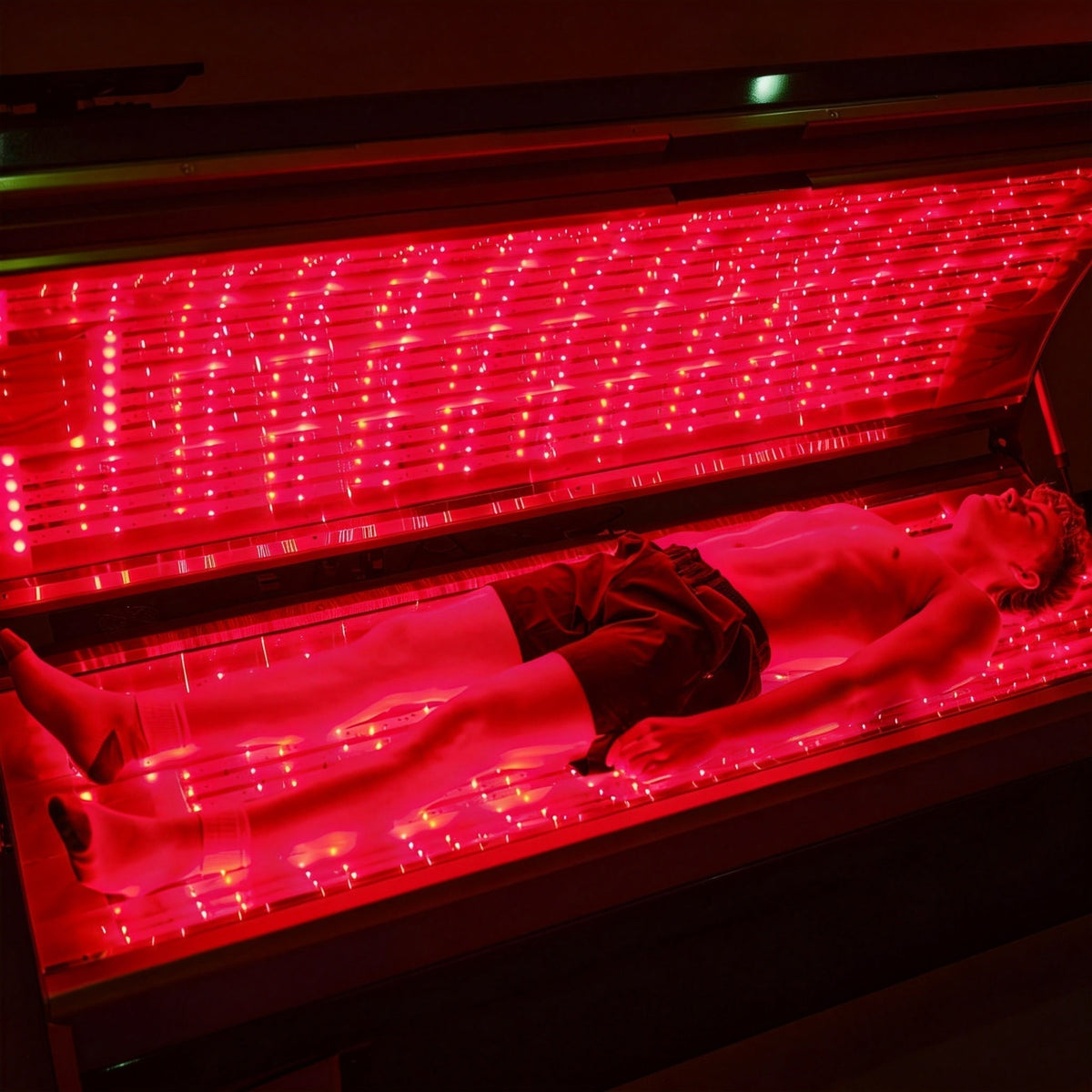
 Figure 1. The difference 14 days of high-power red light therapy can make.
Okay, real talk — my skin was straight-up tragic.
I'm talking breakouts from caking on makeup every single day, dullness from running on three hours of sleep, and those random inflammation bumps that just refuse to leave. You know the ones — they show up out of nowhere, sit on your face for a week, and leave a mark behind just to remind you they were there.
I tried everything. Expensive serums that promised the world and delivered nothing. Chemical peels that left my face red and angry for days. Facials that felt great for an hour and then my skin went right back to being terrible. I was this close to giving up and just accepting that bad skin was my personality now.
Then I kept hearing the same thing from people in the know: red light therapy is the secret everyone in Hollywood and the wealthy circle has been using. Not the cheap LED masks you see all over TikTok — the real, high-power panels that actually deliver enough light energy to do something.
So I was like, fine. I'll try it. Got this Revo panel. Ten minutes a day, prop it up, no mask, no mess.
And within 14 days? My skin was clearer. The redness was gone. The texture was smoother. Even the fine lines around my eyes softened. I actually noticed a difference — like, looked in the mirror and did a double-take kind of difference.
If you're in the same boat, just keep reading. I'm going to tell you exactly what happened, why every celebrity you can name is quietly obsessed with this, and why you probably don't need to spend a fortune at a medspa to get the same results.
But Wait — Is This Just Another Trend?
I know what you're thinking. Another skincare trend, another thing that influencers are getting paid to promote, another waste of money.
I thought the exact same thing. That's why I didn't buy it for months. But then I started noticing something: this wasn't just influencers. This was A-list celebrities, in actual interviews, on actual podcasts, talking about red light therapy like it was the one thing they actually couldn't live without.
And these weren't sponsored posts. These were offhand comments in interviews where nobody was paying them to say anything. That's when I started paying attention.
Let me run through the receipts, because they're kind of wild.
The Celebrity Receipts: Who's Actually Using This
 Figure 2. A-list celebrities who use and recommend red light therapy.
Charlize Theron: "I live in a red light mask."

Let's start with the most unhinged one. Charlize Theron — Oscar winner, 50 years old, skin that looks like she drinks from the fountain of youth every morning — went on Australian radio show "Will & Woody" and was asked how she manages to look so youthful. Her answer? "I live in a red light mask."
She doubled down on an American podcast, saying: "It's the only thing I've done in the last two years where I've thought, wow, I really see a difference."
Let that sink in. Charlize Theron — who has access to every dermatologist, every facialist, every expensive treatment on the planet — said red light therapy is the ONLY thing in the last two years where she actually saw a difference. Not a $500 serum. Not a celebrity facialist. Red light.
She even told ELLE US in an "Ask Me Anything" interview: "I'm obsessed with these skin care lasers. I carry them with me all the time."
Jennifer Aniston: Skeptical at first, then she saw the results.

Jennifer Aniston has been open about her skincare routine for years, and she's tried basically everything. In interviews covering her daily wellness routine, she talked about red light therapy specifically, saying: "I'm always looking for new things that work. Red light therapy was something I was skeptical about at first, and then I started seeing the results."
She uses it several times a week as part of her anti-aging protocol, combining it with facials and serums. Her esthetician, Joanna Czech — who basically runs the most famous faces in Hollywood — is also a proponent.
Aniston even showed off a red light therapy mask in a 2025 Instagram post, which sent the beauty internet into a frenzy. If the woman whose skin has been ageless for 30 years is using this, maybe there's something to it.
Kourtney Kardashian: Built an entire category around it on Poosh.

Kourtney Kardashian doesn't just use red light therapy — she built an entire category around it on her lifestyle platform, Poosh. Poosh has a full guide to light therapy colors, explaining that red light "stimulates collagen production, making red light the go-to for anti-aging effects like minimizing fine lines," and that it also "can have inflammation-reducing effects and can boost circulation."
She's recommended specific LED masks in Poosh gift guides, including the Mirabella Phototherapy 7-Color LED Facial Mask in the 2025 Pooshmas Holiday Gift Guide, noting that "ten minutes a day is all" you need.
Kourtney has said that at-home LED therapy gives her "spa-like results" from home, and she's praised it for stimulating collagen and improving overall skin texture — benefits that used to require expensive in-office treatments.
Dua Lipa: Her mom gave her one, and she noticed fewer breakouts.

Dua Lipa, in a wide-ranging beauty interview with Marie Claire, shared what became one of the most talked-about skincare revelations in recent memory: a compact infrared face light gifted by her mother, small enough to fold flat into a tour suitcase. Her observation? She noticed significant skin improvement and fewer breakouts.
For a global artist crossing time zones weekly, wearing stage makeup under hot lights for hours, and dealing with the stress of constant travel — if red light therapy is what keeps her skin clear, that says something.
And the list goes on...
Kim Kardashian. Victoria Beckham. Chrissy Teigen. Kate Hudson. Madonna. Halle Berry. Emma Stone. Rita Ora. Victoria Justice. All of them have been documented using or recommending red light therapy in some form.
Madonna's fans even spotted a red light device in the background of a TikTok she filmed inside her $40 million Upper East Side mansion — because of course Madonna has a red light setup in her bathroom.
Celebrity makeup artists are also obsessed. They use red light devices on clients before red carpet events and award shows to boost circulation, calm inflammation, and give the skin that "lit from within" glow before makeup even goes on. Makeup artist Georgie Eisdell used an LED light therapy mask on a client before the Governor's Awards, saying it kept her skin "radiant and fresh." Makeup artist Molly Greenwald prepped Alison Brie's skin with an LED mask before a premiere, calling it "excellent for boosting circulation and rejuvenating tone ahead of glam."
This isn't a trend. This is a tool that the people whose entire job is to look good on camera have quietly integrated into their routines, because it actually works.
So Why Doesn't Everyone Use It?
Good question. If all these celebrities are using this and seeing real results, why isn't everyone doing it?
Three reasons, basically.
First, most people think red light therapy means those cheap silicone LED masks you see all over Amazon and TikTok. And honestly? Those things are mostly garbage. They put out less than 100 mW/cm² of power — often far less — which is enough to warm the surface of your skin but not enough to actually penetrate and do anything at the cellular level. You wear one for 20 minutes, you feel like you did something, and then nothing changes. So people write off red light therapy as a scam, when really they just used a weak device.
Second, the good stuff used to be really expensive. Clinical-grade red light panels used to cost thousands of dollars and were only available in dermatologist offices, medspas, and celebrity homes. A single session at a medspa can cost $50 to $150, and you need consistent use — we're talking 2-3 times a week for weeks — to see real results. Do the math: that's $400 to $1,800 a month. Not exactly accessible.
Third, nobody talks about it. Celebrities use it, but they don't make a big deal out of it because it's not a sponsored product — it's just part of their routine. It's the secret they keep because, honestly, if everyone had skin this good, it wouldn't be special anymore.
What Actually Happened When I Used the Revo Panel for 14 Days
 Figure 3. Ten minutes a day at home with the Revo red light panel.
Okay, so here's the part you actually care about. My experience.
I got the Revo red light panel. It's a standalone panel — not a mask, not a blanket, not something you wear. You prop it up on its stand, point it at your face (or whatever body part you want to treat), sit in front of it for 10 minutes, and that's it. No silicone trapping sweat against your skin. No wires tangling in your hair. No cleanup. You can read, scroll your phone, watch TV, or just zone out while the light does the work.
I used it every single day for 14 days. Ten minutes in the morning, after washing my face, before putting on skincare and makeup. That's the whole routine.
Here's what happened, day by day:
Days 1-3: Honestly, nothing dramatic. My skin felt a little warmer after each session, and I noticed the redness from a recent breakout was fading a little faster than usual. But nothing that made me go "wow" yet. I almost quit, because I'm impatient. Glad I didn't.
Days 4-7: This is when I started noticing. The inflammation bumps that usually hang around for a week? They were gone in 3-4 days. The overall redness in my cheeks — that constant, low-grade redness I've had for years — was noticeably calmer. My skin texture felt smoother, less bumpy. And here's the weird thing: my makeup was going on better. Like, foundation was sitting differently, more evenly, because the skin underneath was actually in better shape.
Days 8-14: This is where it got real. I woke up on day 10 and looked in the mirror and thought, "Wait, is that my skin?" The dullness was gone. My skin had this glow — not an oily shine, an actual healthy glow from underneath. The fine lines around my eyes, especially the ones I get from smiling and from not sleeping enough, were softer. Less deep. A dark spot I'd had from an old breakout was visibly fading. And the breakouts? I didn't get a single new one during the second week. Not one.
By day 14, my skin was clearer, brighter, smoother, and calmer than it had been in years. People at work started asking if I'd gotten a facial or changed my makeup. I hadn't. I just added 10 minutes of red light to my morning.
Is this a miracle? No. Is it consistent with what the clinical research says? Absolutely. Red light at the right power and wavelength stimulates collagen production, reduces inflammation, boosts circulation, and accelerates skin cell turnover. That's not marketing — that's photobiomodulation, and it's been studied in hundreds of clinical trials.
Why a Panel, Not a Mask?
 Figure 4. How red light penetrates skin to boost collagen, reduce inflammation, and improve circulation.
I mentioned this earlier, but it's worth going deeper on, because this is the mistake most people make.
LED masks are everywhere. They're cheap, they're Instagrammable, and they promise the same results. But here's the truth: most of them don't have enough power to actually work.
The clinical therapeutic threshold for skin is about 100 mW/cm² at the treatment distance. Most silicone masks put out 30-60 mW/cm² — and that's before you account for the fact that the mask sits on your skin unevenly, so some areas get more light and some get almost none. You're basically paying to wear a warm, slightly glowing face hammock.
A high-power panel is different. The Revo panel, for example, delivers 254.60 mW/cm² — more than double the clinical threshold — with three wavelengths: 660 nm red for surface-level skin rejuvenation and collagen stimulation, 850 nm near-infrared for deeper dermal penetration and inflammation reduction, and 1072 nm far-infrared that penetrates even deeper. That 1072 nm wavelength is the one most masks and consumer devices don't even have, and it's the one that drives the deepest repair.
Because a panel doesn't touch your skin, there's no silicone trapping sweat, no bacteria buildup, no microplastic shedding, and zero cleaning. You just set it up, point it, and sit there. The light is distributed evenly across your entire face because the panel is a uniform grid of LEDs, not a flexible mask that warps and gaps.
And it's not just for your face. You can use it on your neck, your chest, your hands, your back — anywhere you want to treat. A mask only does your face. A panel does everything.
The Math: Why You Don't Need to Pay Medspa Prices
Here's the part that actually made me angry when I did the math.
A single red light therapy session at a medspa or dermatologist office costs $50 to $150, depending on where you live. To see real, lasting results, you need 2-3 sessions per week for at least 4-6 weeks. That's 8-18 sessions, which works out to $400 to $2,700. For one round of treatment. And then you have to keep going for maintenance, because the results fade if you stop.
A Revo red light panel costs less than a single month of medspa sessions. Less than one-tenth the cost of a full treatment package. You buy it once, you use it every day for 10 minutes, and it pays for itself in like two weeks. No appointments, no driving, no waiting rooms, no strangers touching your face. Just you, your panel, and 10 minutes in your own home.
And it's FDA registered, built to the same specifications as clinical devices, so you're getting the same power and wavelength that the celebrities and dermatologists are using — not a watered-down consumer version.
The 30-Day Trial: Zero Risk
 Figure 5. 30-day home trial: love it or send it back.
I know what it's like to buy something online, get it home, and realize it doesn't work. I've wasted so much money on skincare that did nothing.
That's why the 30-day trial matters. Revo offers a 30-day home trial — use it every day for 30 days, and if you don't see a difference in your skin, send it back. No questions, no hassle, no restocking fee. You literally have nothing to lose except 10 minutes a day and the bad skin you're already tired of.
I went into this skeptical. I almost quit after three days because I didn't see immediate results. But by day 14, I was a believer. By day 30, my skin was the best it's been in years. And I still use it every single morning, because why would I stop?
Final Thought
If you're in the same boat I was — breakouts, dullness, inflammation, fine lines, skin that just looks tired — do yourself a favor and try this. Not the cheap mask from Amazon. The real panel. The one that actually has enough power to do something.
Jennifer Aniston was skeptical at first, and then she saw results. Charlize Theron said it's the only thing in two years where she actually saw a difference. Kourtney Kardashian built an entire category around it. Dua Lipa's mom gave her one and she noticed fewer breakouts.
These people have access to every treatment, every product, every expert on the planet. And the thing they keep coming back to — the thing they use when nobody is watching, when there's no camera and no sponsorship — is red light therapy.
You don't need to be a celebrity to have celebrity skin. You need the right tool, 10 minutes a day, and the consistency to stick with it for two weeks. The Revo red light panel gives you the tool. The rest is up to you.
Link below. 30-day trial. Send it back if it's not for you. But I'm betting you won't want to.
— — —
Sources
1. Charlize Theron interview, "Will & Woody" Australian radio show (2026): "I live in a red light mask." — https://headlinesociety.com/2026/04/28/charlize-theron-50-shared-the-anti-aging-skincare-hack-that-outperforms-any-lotion-or-cream-and-its-on-sale/
2. Charlize Theron podcast interview (2026): "It's the only thing I've done in the last two years where I've thought, wow, I really see a difference." — https://www.ma-grande-taille.com/en/people/actress-charlize-theron-shares-a-beauty-tip-she-never-goes-without-443812
3. Charlize Theron, ELLE US "Ask Me Anything" interview: "I'm obsessed with these skin care lasers. I carry them with me all the time." — https://www.elle.pl/uroda/charlize-theron-ujawnila-swoj-pielegnacyjny-sekret-to-on-sprawia-ze-skora-jest-perfekcyjna/
4. Jennifer Aniston daily wellness routine, including red light therapy: "I'm always looking for new things that work. Red light therapy was something I was skeptical about at first, and then I started seeing the results." — https://app.routines.club/blogs/routines/jennifer-anistons-daily-routine
5. Jennifer Aniston anti-aging secrets, JOVS 4D Light Therapy Mask (2025 Instagram post) — https://megelin.com/blogs/celebrities-share/jennifer-aniston-s-anti-aging-secrets
6. Kourtney Kardashian / Poosh, "Shedding Light on Light Therapy: What Do the Different Colors Do?" — https://poosh.com/light-therapy-color-guide/
7. Poosh 2025 Holiday Gift Guide, Mirabella Phototherapy 7-Color LED Facial Mask — https://poosh.com/2025-kardashian-jenner-holiday-gift-guide/
8. Dua Lipa, Marie Claire beauty interview, portable infrared face light — https://www.celluma.asia/blogs/led-therapy-tips/dua-lipa-celluma-led-therapy
9. 20 Celebrities Who Use Red Light Therapy (Jennifer Aniston, Kourtney Kardashian, Halle Berry, Emma Stone, Victoria Justice, and more) — https://heavenlyheatsaunas.com/blogs/wellness-insights/20-celebrities-who-use-red-light-therapy-for-glowing-skin-and-wellness
10. Celebrities Using Red Light Therapy (Madonna TikTok red light device, Kim Kardashian, Victoria Beckham, and more) — https://www.lighttherapyinsiders.com/celebrities-using-red-light-therapy/
11. Celebrity makeup artists using LED light therapy before red carpet events (Georgie Eisdell, Molly Greenwald) — https://www.projectebeauty.com/blogs/news/celebrity-red-light-therapy-skincare-routine