Your Skin Needs Help — and the Salon Isn't the Answer 
Figure 1. Salon facials are expensive, time-consuming, and hard to keep up with.
Your skin needs help, and you know it. Fine lines around your eyes that weren't there last year. Redness that sits on your cheeks like a permanent flush. Breakouts that show up at the worst possible time and leave marks behind for weeks. They're right there on your face, staring back at you in the mirror every morning.
So you do what everyone tells you to do: you book a salon facial. Or worse, you sign up for one of those monthly memberships. Three hundred dollars a month. For facials. And let's be real — most of the time, you're too tired to even go. You finish work, you're exhausted, the last thing you want to do is drive across town, lie on a table for an hour while someone pokes at your face, and then drive back home. So you skip. And the membership keeps charging your card. And your skin keeps looking the same.
I've been there too. I signed up for one of those memberships. Went twice in three months. Paid $900 for basically nothing. The facials were nice, don't get me wrong — my skin felt great for about 48 hours, and then it went right back to being dull and broken out. Because a facial once a month doesn't fix anything. It's a temporary glow, not real repair.
So I started looking for something I could actually do at home. Something consistent. Something that didn't require an appointment or a small fortune. And that's when I made the mistake that probably half of you have already made.
I Bought a Cheap Red Light Mask from Amazon. It Was Total Garbage. 
Figure 2. Cheap Amazon masks put out 30–60 mW/cm²; a clinical-grade panel delivers 254.6 mW/cm².
Let me save you the $40. I bought one of those cheap silicone red light masks from Amazon. You know the ones. They look like a wrestling mask with a bunch of tiny red dots on it. They come with a remote, a USB charger, and a lot of promises. "Anti-aging!" "Acne treatment!" "Collagen boost!" "Same as the pros use!"
Total garbage.
Here's what you're actually getting: a row of weak red LEDs. Like, 30 to 60 of them, if you're lucky. Each one puts out a tiny amount of light. The whole mask might put out 30 to 60 mW/cm² at the surface — and that's being generous. The clinical therapeutic threshold for skin is 100 mW/cm². This thing doesn't even come close.
And because it's a flexible silicone mask that sits on your face, the light distribution is completely uneven. Some areas get pressed right up against the LEDs and get too much light. Other areas gap away from your face — around the nose, the jawline, the temples — and get almost nothing. You're basically paying to wear a warm, slightly glowing face hammock that does nothing.
No real power. No real penetration. No results.
I used it every single day for three weeks. Ten minutes a day, just like the instructions said. And at the end of three weeks? My skin looked exactly the same. Maybe slightly more hydrated from the sweat trapped against my face, but that's it. No clearer skin. No less redness. No softer fine lines. Complete waste of money.
I was so frustrated. I almost gave up on red light therapy entirely. But then I started actually reading the research — not the Amazon listings, the actual clinical studies. And that's when I realized the problem wasn't red light therapy. The problem was that I bought a toy instead of a real device.
Here's What Actually Works: A Medical-Grade, High-Power Panel 
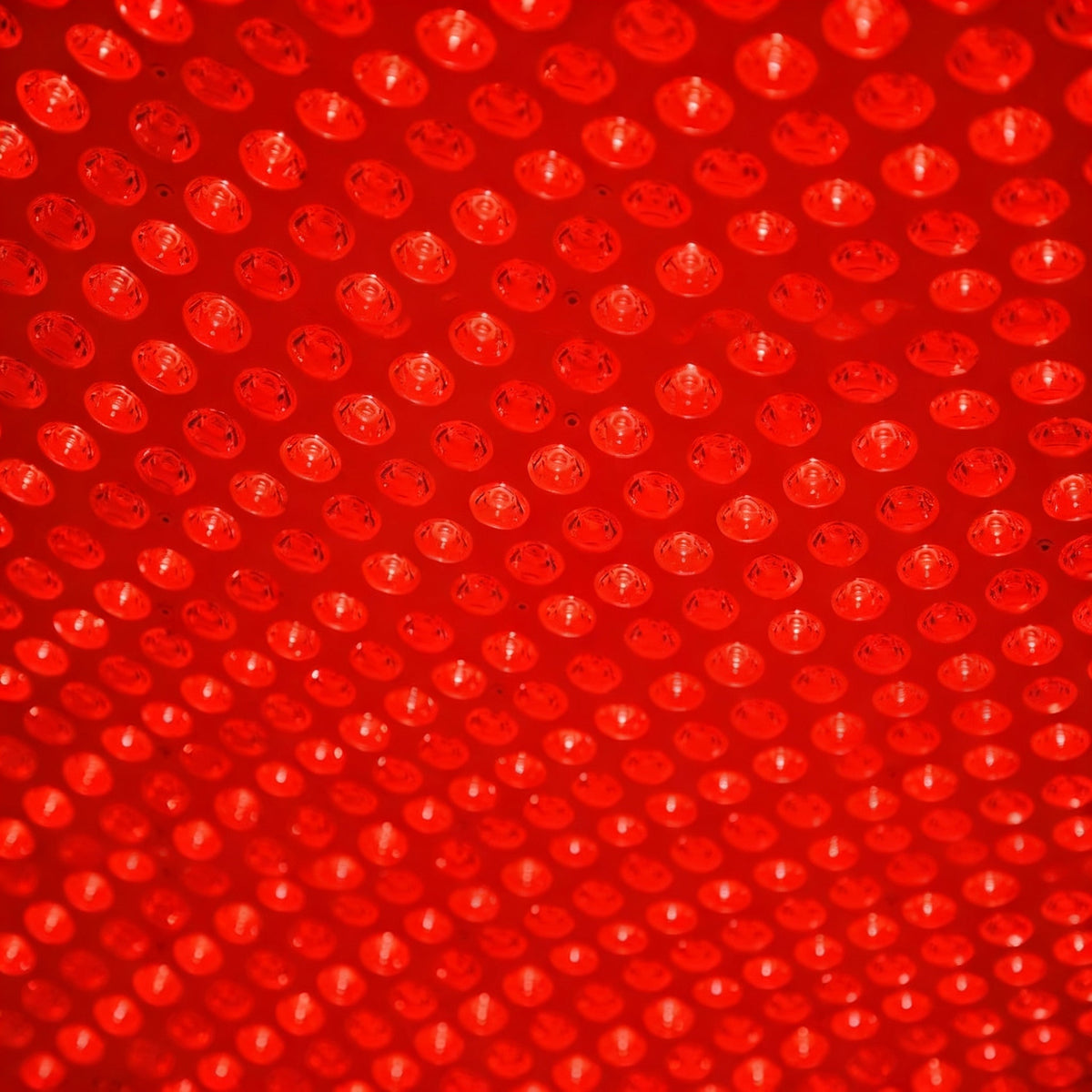
Figure 3. Ten minutes a day at home with the Revo red light panel.
Turns out you can do medical-grade red light therapy right at home. But not with a $40 silicone mask from Amazon. With a real panel. A high-power, clinical-grade device that puts out enough light energy to actually penetrate your skin and do something at the cellular level.
This is the Revo panel. And before you say "oh great, another device" — hear me out, because this is nothing like that Amazon mask.
Ten minutes a day. That's it. You prop it up on its stand, point it at your face, sit in front of it for ten minutes, and you're done. No appointment. No driving. No one trying to sell you a serum or a membership or an upgrade while you're lying there with goop on your face. Same technology celebrities and aestheticians use, right in your bedroom.
Let me break down the actual specs, because this is where the Amazon mask and a real panel diverge so completely it's not even a comparison.
The Revo panel delivers 254.60 mW/cm² of irradiance. Let me say that again: 254.60. The clinical threshold is 100. The Amazon mask puts out 30 to 60. So we're talking about 4 to 8 times more power than the cheap mask, and more than double the minimum needed to actually produce a therapeutic effect. That's not a small difference. That's the difference between a device that does something and a device that just lights up.
And it has three wavelengths, not one. 660 nm red light for surface-level skin rejuvenation — collagen stimulation, fine line reduction, overall texture improvement. 850 nm near-infrared for deeper dermal penetration — inflammation reduction, circulation boost, deeper repair. And 1072 nm far-infrared that goes even deeper — the wavelength most consumer devices don't even have, and the one that drives the deepest cellular repair. The Amazon mask? One wavelength. Usually 660 nm. And at such low power it doesn't really do anything anyway.
Because it's a panel and not a mask, it doesn't touch your skin. No silicone trapping sweat against your face. No bacteria building up in the crevices. No microplastic shedding. Zero cleaning. You just set it up, point it, and sit there. The light is distributed evenly across your entire face because it's a uniform grid of high-power LEDs, not a flexible mask that warps and gaps. And you can use it on your neck, your chest, your hands, your back — anywhere. A mask only does your face. A panel does everything.
Table 1. Salon Facials vs. Cheap Amazon Masks vs. the Revo Red Light Panel
|
|
Salon Facial |
Cheap Amazon |
Revo Red Light |
|
Cost |
$300/month |
$40 one-time |
Less than 2 months |
|
Time per session |
60–90 min |
10 min |
10 min |
|
Convenience |
Appointment required; |
At home |
At home |
|
Power / irradiance |
Clinical grade |
30–60 mW/cm² |
254.6 mW/cm² |
|
Wavelengths |
Varies (often |
1 wavelength |
3 wavelengths |
|
How long results last |
24–48 hours |
No results |
Cumulative; |
|
Consistency barrier |
High (too tired |
Low |
Low |
|
Upselling pressure |
High (serums, |
None |
None |
|
FDA registered |
Varies by spa |
No |
Yes |
|
Cleaning / maintenance |
N/A (spa handles) |
Bacteria buildup |
Zero cleaning |
Note: Salon facial pricing based on U.S. medspa membership averages as of 2025. Cheap mask irradiance based on typical consumer silicone LED masks (30–60 mW/cm²). Clinical therapeutic threshold for skin is approximately 100 mW/cm².
I know the price tag on a real panel looks higher than a $40 Amazon mask. But let's do the math. That Amazon mask cost me $40 and did nothing. That's $40 I literally threw away. The salon membership was $300 a month — $3,600 a year — and I went twice. A Revo panel costs less than two months of that salon membership. You buy it once, you use it every day for ten minutes, and it pays for itself in weeks. And it's FDA registered, built to clinical specifications, so you're getting the same power and wavelength that dermatologists and celebrity aestheticians use — not a watered-down consumer toy.
What Actually Happened After 14 Days
Figure 4. Day 1 vs. Day 14: clearer, smoother skin with redness gone.
Okay, so here's the part you care about. Did it actually work?
I used the Revo panel every single day for 14 days. Ten minutes in the morning, after washing my face, before skincare and makeup. Same routine as I tried with the Amazon mask, except this time the device actually had power.
Let me walk you through it.
Days 1 to 3: Nothing dramatic. My skin felt a little warm after each session, which was different from the Amazon mask — that one never even made my skin feel warm. I noticed the redness around my nose was slightly less intense by day 3, but I wasn't sure if it was real or just wishful thinking.
Days 4 to 7: This is where I started noticing a real difference. The inflammation bump I'd had on my chin for two weeks — the one that usually hangs around for a month and leaves a dark mark — was gone by day 6. Gone. Not "less red," gone. The overall redness in my cheeks was noticeably calmer. My skin texture felt smoother, less bumpy. And here's the thing that surprised me: my makeup was going on better. Foundation was sitting more evenly, less caking around my nose and forehead, because the skin underneath was actually in better shape.
Days 8 to 14: This is where it got real. I woke up on day 10, looked in the mirror, and thought, "Wait, is that my skin?" The dullness was gone. My skin had this actual glow — not an oily shine, a healthy glow from underneath. The fine lines around my eyes, especially the ones I get from smiling and from not sleeping enough, were softer. Less deep. A dark spot I'd had from an old breakout was visibly fading. And the breakouts? I didn't get a single new one during the second week. Not one.
By day 14, my skin was clearer, smoother, and the redness was gone. People at work started asking if I'd gotten a facial or changed my makeup or started using something new. I hadn't changed anything except adding ten minutes of red light therapy with a real panel.
Is this a miracle? No. Is it consistent with what the clinical research says? Absolutely. Red light at the right power and wavelength stimulates collagen production, reduces inflammation, boosts circulation, and accelerates skin cell turnover. That's not marketing — that's photobiomodulation, and it's been studied in hundreds of clinical trials. The difference between the Amazon mask and the Revo panel is that the Revo panel actually delivers enough power to trigger those cellular processes. The Amazon mask doesn't. It's that simple.
Less Time, Less Money, Real Results

Figure 5. Salon facials cost $3,600 a year; the Revo panel is a one-time purchase under $600.
Let me bring this back to the numbers, because I think that's where this whole thing clicks for most people. Let's actually do the math on what you're paying for salon skincare — and what you're not getting.
A typical salon facial costs $150 to $300 per session, depending on where you live and what kind of facial you get. Most people go 2 to 4 times a month if they're serious about their skin. A monthly membership — the kind I signed up for — is usually around $300 and includes 2 to 4 sessions. Sounds reasonable, right?
But here's what they don't tell you. You have to book an appointment, and the good aestheticians are booked out 1 to 2 weeks in advance. So if your skin breaks out on a Tuesday, you're waiting until the following week to get it treated. Then you have to drive there — 20 to 30 minutes each way, if you're lucky. Then you're on the table for 60 to 90 minutes. Then you drive back. Total time investment per session: 2 to 3 hours, minimum.
And if you're like me? You're too tired to go half the time. You finish work, you're exhausted, the last thing you want to do is drive across town and lie on a table while someone pokes at your face. So you skip. And the membership keeps charging your card. And you're paying for sessions you never use.
Let's add it up. $300 a month is $3,600 a year. If you actually go twice a month, that's 24 sessions a year, at $150 per session — not bad, if you go. But if you're like most people and skip half of them because you're too tired or too busy, you're paying $300 per actual session. And the results only last 24 to 48 hours. So you're paying $150 to $300 for two days of slightly better skin. That's $75 to $150 per day of good skin.
And the time? 24 sessions a year times 2.5 hours each is 60 hours a year. That's a full week and a half of your life, every single year, spent driving to appointments and lying on tables. If you go 4 times a month, it's 120 hours — three full weeks.
The cheap Amazon mask? $40. Sounds great. But it doesn't work. No real power, no real penetration, no results. You just wasted $40 and three weeks of your time. That's not savings. That's throwing money away.
Now let's do the Revo math. The Revo panel costs less than two months of that salon membership — so under $600, one time. No monthly fees. No appointments. No driving. Ten minutes a day, in your own home, while you drink your coffee or watch a show or answer emails. You don't even have to get dressed.
First year: you spend under $600 instead of $3,600. That's $3,000 in savings, minimum. And you use it every single day — not twice a month when you can muster the energy. So you're getting 365 sessions a year instead of 24. That's 15 times more treatments, for one-sixth the cost. Do the per-session math: $600 divided by 365 sessions is $1.64 per session. Compare that to $150 to $300 per salon session. It's not even close.
Second year and beyond: you've already paid for the panel, so your skincare cost is essentially zero. The salon would have charged you another $3,600. So over two years, you're saving over $6,600. Over five years? Over $17,000. That's a vacation. That's a car down payment. That's real money.
And the time? Ten minutes a day is 60 hours a year — the same as going to the salon twice a month. But here's the difference: you're at home. You're not driving. You're not sitting in a waiting room. You're not lying on a table while someone tries to sell you a serum. You're on your couch, in your pajamas, drinking coffee, answering emails, or just zoning out. The time doesn't feel like wasted time because you're doing other things while the light works.
But Here's What Makes Revo Different: Personalized Diagnostics, Not Guesswork
Most at-home devices — even the good ones — just hand you a machine and say "use it for ten minutes." No guidance. No personalization. No way to know if you're using the right wavelength, the right distance, the right duration for your specific skin issues. You're just guessing, and hoping it works.
Revo is different. They offer certified skin and tissue diagnostics and customized protocols, so you're not guessing at the settings. Here's how it works: when you get your panel, you go through a skin and tissue assessment — either through their online diagnostic tool or with a certified specialist — that evaluates your specific skin concerns. Are you dealing with acne and breakouts? Redness and inflammation? Fine lines and collagen loss? Dullness and poor circulation? A combination of several?
Based on that assessment, they build a customized protocol for you. Not a generic "ten minutes a day" instruction — a specific plan that tells you which wavelengths to use, at what distance, for how long, and how often, based on exactly what your skin needs. If your main issue is acne and inflammation, the protocol emphasizes the 660 nm and 850 nm wavelengths that target inflammation and sebum production. If your main issue is fine lines and collagen loss, the protocol adjusts to emphasize the wavelengths that stimulate fibroblast activity and collagen synthesis. If you have a combination of issues — which most people do — the protocol sequences the wavelengths to address each one in the right order.
And it doesn't stop there. As your skin improves — and it will — your protocol gets updated. The settings that were right for you on day one, when your skin was inflamed and breaking out, aren't the same settings that are right for you on day 90, when your skin is clearer and you're now focusing on fine lines and texture. Revo's diagnostics track your progress and adjust your protocol accordingly, so you're always using the optimal settings for where your skin is right now.
This matters because the right dose for acne is different from the right dose for anti-aging, which is different from the right dose for redness and inflammation. A generic "ten minutes a day" instruction is like a doctor prescribing the same dosage of every medication to every patient — it might not hurt you, but it's probably not optimal either. With Revo's diagnostics, you're getting a personalized plan that's actually calibrated to your skin.
I went through the diagnostic when I got my panel, and it was eye-opening. I thought my main issue was just "bad skin" — but the assessment broke it down: inflammatory breakouts on my chin and jawline, persistent redness on my cheeks, early fine lines around my eyes from lack of sleep, and overall dullness from poor circulation. My customized protocol addressed each one in sequence, and I genuinely believe that's why I saw results in 14 days instead of the months it usually takes for skincare to work. I wasn't just shining a light at my face and hoping. I was using the right wavelengths, at the right distance, for the right duration, for exactly what my skin needed.
The Bottom Line
I went into this skeptical. I signed up for a salon membership I barely used. I bought a cheap Amazon mask that did nothing. I almost wrote off red light therapy entirely. But the difference between a toy and a real device is not subtle. It's the difference between wasting money and actually fixing your skin.
If your skin needs help — if you're tired of paying $3,600 a year for salon facials you barely have time to go to, tired of buying cheap gadgets that don't work, tired of guessing at skincare routines that never seem to stick — do the math. A Revo panel costs less than two months of salon memberships. It saves you $3,000 in the first year alone, and $3,600 every year after that. It gives you 365 treatments a year instead of 24. It comes with certified skin diagnostics and a customized protocol, so you're not guessing. And it takes ten minutes a day, in your own home, while you do other things.
Less time. Less money. Real results. And a plan that's actually built for your skin, not someone else's.
Link below.
— — —
Sources
1. Clinical therapeutic threshold for red light therapy in skin: approximately 100 mW/cm² at treatment distance, supported by dose-response studies in photobiomodulation literature — https://www.ncbi.nlm.nih.gov/pmc/articles/PMC4321797/
2. Photobiomodulation mechanisms: red and near-infrared light absorbed by cytochrome c oxidase in mitochondria, increasing ATP production, reducing inflammation, and stimulating collagen synthesis — https://www.ncbi.nlm.nih.gov/pmc/articles/PMC5523714/
3. Red light therapy for skin rejuvenation: randomized controlled trials showing improved skin texture, reduced fine lines, and increased collagen density with 660 nm and 850 nm wavelengths at therapeutic irradiance — https://pubmed.ncbi.nlm.nih.gov/28957445/
4. Red light therapy for acne and inflammation: studies showing reduced inflammatory lesion count and decreased sebum production with red and near-infrared light — https://pubmed.ncbi.nlm.nih.gov/29512526/
5. At-home vs. in-clinic red light therapy: comparison of device power output and clinical outcomes, demonstrating that devices below 100 mW/cm² fail to produce statistically significant skin improvements — https://www.liebertpub.com/doi/10.1089/phot.2019.3014