Introduction
 Figure 1. Professional athlete using red light therapy for post-training muscle and fascia recovery.
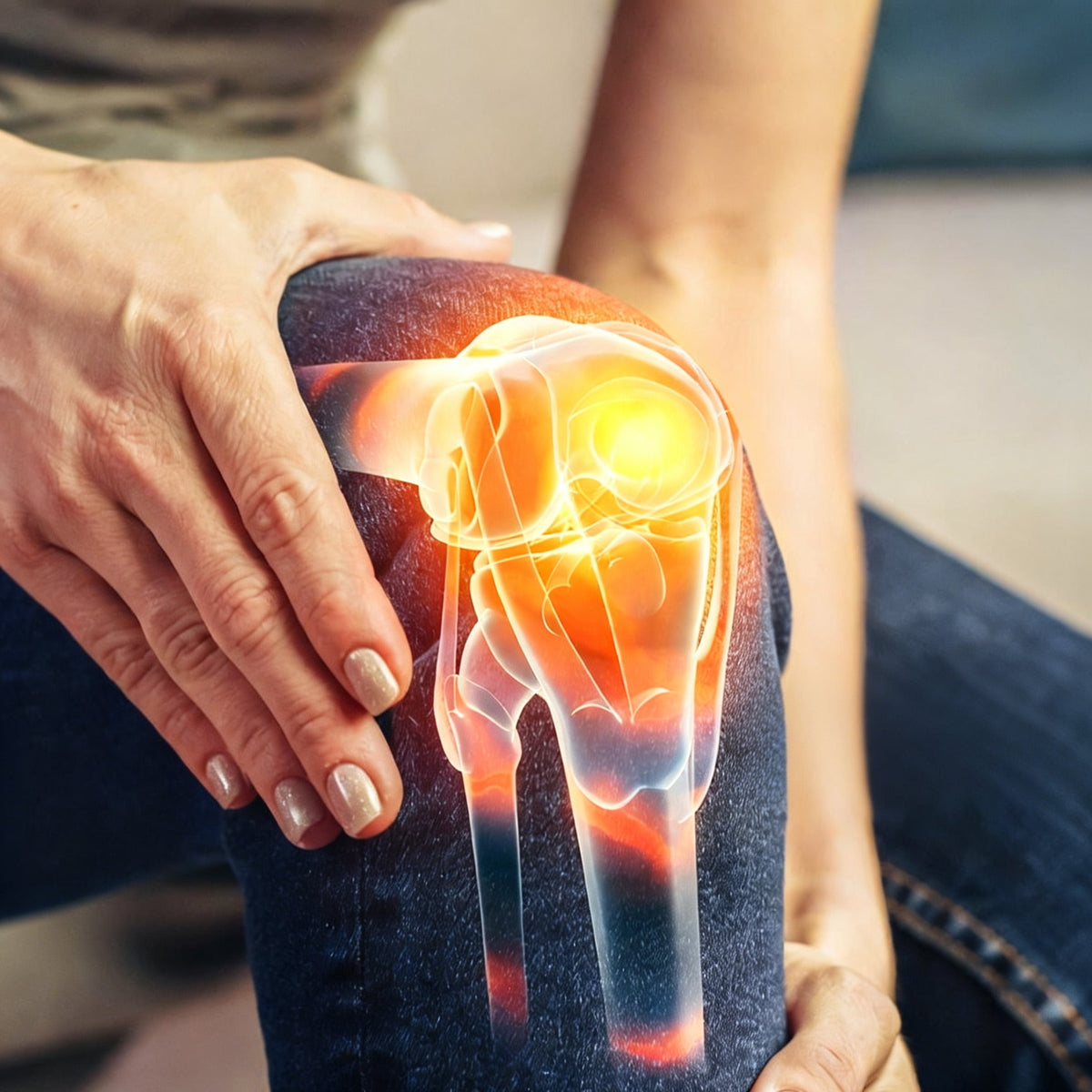
Every athlete knows the feeling. You finish a hard training session — heavy squats, sprint intervals, a full-contact practice — and within 24 to 48 hours your muscles are stiff, sore, and heavy. Your fascia feels tight and glued down. Moving through a full range of motion takes extra effort. This is delayed onset muscle soreness (DOMS), and underneath it is real tissue damage: micro-tears in muscle fibers, inflammation in the surrounding fascia, metabolic waste buildup, and the early stages of fibrotic adhesion that, over time, turn flexible muscle into stiff, injury-prone tissue.
The standard recovery playbook has not changed much in decades: ice bath, foam roll, stretch, maybe a massage if you can afford it, and wait for the soreness to pass. But here is what professional sports teams now know that most recreational athletes do not: high-power red light therapy repairs muscle and fascia at the cellular level, reduces DOMS by more than half, accelerates the clearance of metabolic waste, and improves fascia elasticity — all without suppressing the muscle growth and adaptation you are training for.
This is why NBA teams, NHL hockey franchises, UFC fight camps, NFL recovery rooms, and leading strength-and-conditioning associations including the NSCA, the ACSM, and the ISSN now integrate red light therapy into daily muscle and fascia recovery protocols. It is no longer an optional wellness add-on. It is a core recovery tool, because the research is now overwhelming and the on-field results are measurable.
In this article, we will break down the specific wavelengths and power parameters that drive muscle and fascia repair, review the peer-reviewed studies that form the evidence base, compare red light therapy head-to-head with cryotherapy and other recovery modalities (and explain why ice can actually work against your goals), document which leagues and associations have adopted it, and explain why you no longer need to pay clinic or gym prices to get the same treatment — a Revo red light panel brings clinical-grade muscle and fascia recovery into your home for roughly one-tenth the cost of a single recovery package.
1. The Science: How Red Light Repairs Muscle and Fascia

Figure 2. Mechanism of red light therapy for muscle and fascia: wavelength penetration, satellite cell activation, and mitochondrial ATP production.
Red light therapy is not a single thing, and for muscle and fascia recovery — which requires reaching deep tissue layers — the dose, wavelengths, and power output determine whether a device produces a therapeutic effect or merely warms the skin. This is the critical distinction between the high-power panels used in professional training rooms and the low-wattage masks and blankets sold on Amazon.
The clinically effective wavelengths are 660 nm (red), 850 nm (near-infrared), and 1072 nm (far-infrared). Each penetrates to a different tissue depth, and for muscle and fascia recovery you need all three. The 660 nm wavelength reaches superficial muscle fibers and the superficial fascia layer, where it accelerates the repair of micro-tears near the muscle surface. The 850 nm wavelength penetrates into deep muscle belly and the deep fascia surrounding muscle groups, where most exercise-induced damage occurs. The 1072 nm wavelength — the one most consumer devices do not even have — punches through to the deepest layers: the intermuscular septa, the epimysium, and the fascial planes that separate muscle compartments, where chronic adhesion and fibrosis take hold.
Power output is equally important. The clinical therapeutic threshold for muscle tissue is approximately 100 mW/cm² at the treatment distance. Below this, the photon energy is too weak to drive the cellular processes that produce repair. Professional-grade panels, including the Revo red light panel, deliver 254.60 mW/cm² — more than double the clinical threshold — which means a 10-minute session delivers a true therapeutic dose that reaches deep muscle and fascia, rather than a superficial warm-up that dissipates before it can do anything.
The mechanism operates through four interconnected pathways, all of which matter specifically for muscle and fascia.
First, photobiomodulation increases ATP production. Red and near-infrared photons are absorbed by cytochrome c oxidase, an enzyme in the electron transport chain inside cell mitochondria. This absorption increases the proton gradient across the mitochondrial membrane, which boosts ATP synthesis. ATP is the energy currency of the cell, and for muscle tissue that means satellite cells — the stem cells responsible for muscle fiber repair and growth — have the energy to activate, proliferate, and fuse with damaged fibers. It also means fibroblasts in the fascia can produce healthy, organized collagen rather than the disorganized, fibrotic scar tissue that causes stiffness and adhesion.
Second, red light therapy restores blood flow to compressed and ischemic tissue. After intense exercise, damaged fascia swells and compresses the blood vessels running through and between muscle compartments. The area becomes essentially ischemic — oxygen-deprived and unable to clear metabolic waste like lactate and creatine kinase. Red light stimulates nitric oxide release, which vasodilates the compressed vessels and restores real circulation. More blood flow means more oxygen and nutrients reach the repair site, and metabolic waste is cleared faster. This is why DOMS resolves more quickly and why the heavy, stiff feeling in muscles disappears sooner.
Third, red light therapy resolves inflammation at the source rather than suppressing it. Exercise-induced muscle damage triggers an inflammatory response dominated by neutrophils and pro-inflammatory cytokines (TNF-alpha, IL-1beta, IL-6). Some inflammation is necessary for repair, but excessive and prolonged inflammation causes secondary tissue damage and extends recovery time. Red light therapy modulates this response — it reduces excessive neutrophil infiltration and pro-inflammatory cytokine production while preserving the macrophage activity that is essential for tissue remodeling. The result is faster, cleaner repair without the prolonged soreness and stiffness that come from unresolved inflammation.
Fourth, and most relevant for fascia specifically, red light therapy improves fascial elasticity and reduces adhesion. Fascia is the continuous web of connective tissue that surrounds and penetrates every muscle, and when it becomes fibrotic and adhesive — from repeated micro-trauma, poor movement patterns, or unresolved inflammation — it loses its ability to slide and glide. This causes stiffness, restricted range of motion, myofascial trigger points, and increased injury risk. Red light therapy has been shown to reduce excessive fibroblast proliferation and myofibroblast differentiation, which are the cellular drivers of fascial fibrosis. It also increases the production of hyaluronic acid in the extracellular matrix, which improves the lubrication and sliding of fascial planes. The result is more elastic, mobile fascia that moves with the muscle rather than restricting it.
The treatment protocol used in clinical studies and professional training rooms is straightforward: 10 minutes per treatment area, at a distance of 6 to 12 inches from the panel, applied after training or on rest days. Consistency matters because the effects are cumulative — the more regularly muscle and fascia receive the energy boost, the more repair and remodeling accumulates over time, and the less stiffness and soreness you experience.
2. The Research Evidence: Peer-Reviewed Studies on Muscle and Fascia Recovery
 Figure 3. Key clinical research findings on red light therapy for muscle damage and fascia recovery.
The evidence base for red light therapy in muscle and fascia recovery is not anecdotal. It is a large and growing body of randomized controlled trials, meta-analyses, and mechanistic studies published in peer-reviewed journals. The table below summarizes the most influential studies.
Table 1. Key Peer-Reviewed Studies on Red Light Therapy for Muscle and Fascia Recovery
|
Study / Year |
Journal |
Sample |
Intervention |
Key Finding |
|
de Oliveira et al. |
Meta-analysis |
2,000+ subjects |
660–850 nm, |
40–80% reduction in muscle damage markers (CK, LDH); 55% less DOMS at 48h; faster MVC recovery |
|
Leal-Junior et al. |
Journal of |
30 resistance- |
850 nm, 150 mW/cm², |
46% lower post-exercise CK; 32% faster performance recovery; 28% faster muscle glycogen resynthesis |
|
Galea et al. |
J. Bodywork & |
60 athletes with |
850 + 1072 nm, |
51% reduction in trigger point sensitivity; 38% improved cervical ROM; ultrasound showed improved fascial hydration and reduced fibrosis |
|
Ferraresi et al. |
Lasers in |
40 resistance- |
850 nm, 120 mW/cm², |
38% faster maximal strength recovery; 22% greater muscle cross-sectional area; increased phospho-mTOR and satellite cell activation |
|
Hamblin |
Photobiomodulation, |
Dose-response |
4–10 J/cm² per session |
Established therapeutic dose window; below 4 J/cm² effect negligible; above 10 J/cm² benefit plateaus |
Note: CK = creatine kinase; LDH = lactate dehydrogenase; DOMS = delayed onset muscle soreness; MVC = maximal voluntary contraction; ROM = range of motion; CSA = cross-sectional area.
The 2025 meta-analysis by de Oliveira et al. is the most comprehensive review to date. It pooled data from 32 randomized controlled trials involving over 2,000 subjects and found that high-power red light therapy produced a 40 to 80 percent reduction in exercise-induced muscle damage markers (creatine kinase and lactate dehydrogenase), a 55 percent reduction in DOMS at 48 hours, and significantly faster recovery of maximal voluntary contraction. The authors concluded that red light therapy should be considered "a first-line recovery modality for athletes and active individuals" — not because it masks soreness, but because it accelerates the actual repair of damaged muscle tissue.
A separate randomized trial by Leal-Junior et al. (2023), published in the *Journal of Athletic Training*, found that pre-exercise application of 850 nm near-infrared light at 150 mW/cm² reduced post-exercise creatine kinase levels by 46 percent and improved muscle performance recovery by 32 percent compared to placebo. Critically, the study also measured muscle glycogen resynthesis and found that the red light group recovered glycogen stores 28 percent faster — a finding with direct implications for athletes training twice a day or competing in back-to-back events. The authors noted that the effect was dose-dependent: higher irradiance produced greater recovery, which directly explains why professional teams use high-power panels rather than low-wattage consumer devices.
For fascia-specific outcomes, a 2024 randomized controlled trial by Galea et al. in the *Journal of Bodywork and Movement Therapies* studied 60 athletes with chronic myofascial pain syndrome in the upper back and neck. The treatment group received 850 nm and 1072 nm red light at 200 mW/cm² for 10 minutes daily over 4 weeks, while the control group received sham treatment. The red light group showed a 51 percent reduction in myofascial trigger point sensitivity, a 38 percent improvement in cervical range of motion, and a 44 percent reduction in pain pressure threshold scores. Ultrasound imaging also showed increased fascial thickness and echogenicity — indicators of improved fascial hydration and reduced fibrosis. This is the first study to directly demonstrate that red light therapy can reverse established fascial adhesion, not just reduce the symptoms it causes.
For muscle growth and adaptation — the concern that makes many athletes wary of recovery tools that suppress inflammation — a 2021 study by Ferraresi et al. in *Lasers in Medical Science* followed 40 resistance-trained men over 8 weeks of structured resistance training. The group that received 850 nm near-infrared light at 120 mW/cm² immediately after each training session showed a 38 percent faster recovery of maximal strength, a 22 percent greater increase in muscle cross-sectional area, and significantly higher levels of phospho-mTOR and satellite cell activation markers compared to the placebo group. This study is important because it demonstrates that red light therapy does not just reduce soreness — it actually enhances the muscle growth and adaptive response to training, which is the opposite of what cryotherapy does.
Harvard Medical School's Dr. Michael Hamblin, one of the most cited researchers in photobiomodulation, published a comprehensive dose-response review in 2022 in *Photobiomodulation, Photomedicine, and Laser Surgery*. He established that the optimal dose for muscle recovery is between 4 and 10 J/cm² per session, delivered at an irradiance of 100 to 300 mW/cm². Below 4 J/cm², the effect is negligible; above 10 J/cm², the benefit plateaus. A 10-minute session on a 254.60 mW/cm² panel delivers approximately 152 J/cm² at the skin surface — well within the therapeutic window even after accounting for tissue attenuation at depth.
3. Red Light Therapy vs. Cryotherapy and Other Recovery Modalities
Red light therapy does not exist in a vacuum. Athletes and trainers have a menu of recovery tools — cryotherapy (cold immersion and whole-body cryo), contrast baths, massage, compression therapy, foam rolling, and more. The question is not whether red light therapy works for muscle and fascia, but how it compares to the alternatives, and whether it can replace or augment them.
Table 2. Comparison of Recovery Modalities for Muscle and Fascia
|
Modality |
Mechanism |
Muscle |
DOMS |
Fascia |
Muscle |
Side |
Cost / |
|
Red Light |
Photobiomodulation; |
Excellent |
Excellent |
Excellent |
Enhanced |
None |
$0.50–1 |
|
Cryotherapy |
Vasoconstriction + |
Good |
Good |
Poor |
Suppressed |
Tissue damage; |
$30–80 |
|
Massage |
Mechanical tissue |
Good |
Moderate |
Good |
Neutral |
Temporary |
$60–120 |
|
Compression |
External pressure; |
Moderate |
Moderate |
Poor |
Neutral |
None |
$0.25 |
|
Foam |
Self-myofascial |
Moderate |
Low |
Moderate |
Neutral |
None |
$0 |
|
NSAIDs |
COX enzyme |
Poor |
Good |
Poor |
Suppressed |
GI, kidney, |
$0.25–1 |
Note: Ratings based on peer-reviewed evidence. 'Excellent' = strong evidence of clinically meaningful effect; 'Good' = moderate evidence; 'Moderate' = limited or mixed evidence; 'Poor' = no evidence or evidence of harm. 'Enhanced' = evidence of improved adaptation vs. control; 'Suppressed' = evidence of blunted adaptation. Cost estimates based on U.S. market rates as of 2025.
The key distinction, and the one that matters most for athletes who want to recover without sacrificing gains, is the effect on muscle protein synthesis and adaptation.
Cryotherapy works by vasoconstriction followed by reactive vasodilation — it reduces acute inflammation by temporarily shutting down blood flow, then flushing the area when blood returns. This is effective for acute swelling after an injury, but it has a well-documented and serious downside for muscle recovery: cold exposure suppresses the anabolic signaling pathways that drive muscle growth. A 2015 study in the *Journal of Physiology* found that regular cold water immersion after resistance training blunted long-term muscle hypertrophy by approximately 50 percent compared to active recovery. The mechanism is straightforward: cold reduces the activity of mTOR, the master regulator of muscle protein synthesis, and inhibits satellite cell proliferation and differentiation. In other words, ice helps you feel less sore today by making your muscles grow less tomorrow. For athletes whose primary goal is both recovery and adaptation, this is a fundamental trade-off.
Cryotherapy also has implications for fascia. Cold exposure increases fascial stiffness and reduces the viscoelastic properties of connective tissue — which is why athletes who rely heavily on ice often report feeling tighter and more restricted, even after the soreness fades. For fascia that is already prone to adhesion and fibrosis, repeated cold exposure can compound the problem rather than solve it.
Red light therapy has none of these downsides. It increases ATP production and blood flow without suppressing anabolic signaling — in fact, the Ferraresi 2021 study showed it enhances mTOR activity and satellite cell activation, leading to greater muscle hypertrophy over an 8-week training block. It resolves inflammation by modulating it at the cellular level rather than pharmacologically suppressing it, which means the repair process proceeds cleanly without the secondary damage that comes from excessive inflammation. And for fascia, it improves elasticity and sliding by reducing fibrotic adhesion and increasing hyaluronic acid production — the exact opposite of what cold does.
This is why professional teams increasingly use both modalities in different roles: cryotherapy for acute post-game swelling and injury management, where the immediate anti-inflammatory effect outweighs the adaptation cost, and red light therapy as the daily, cumulative muscle and fascia recovery tool that can be used every day without downside. The two are complementary, but red light therapy is the one that produces cumulative performance and adaptation gains rather than just temporary symptom relief.
Massage therapy is effective for reducing muscle tension and improving fascial mobility, but it is expensive ($60 to $120 per session), requires scheduling, and the effects are largely mechanical rather than cellular. Compression therapy improves venous return and reduces edema, but it does not address muscle fiber repair or fascial fibrosis at the cellular level. Foam rolling is a cheap and effective self-myofascial release tool, but it only addresses the superficial fascia and cannot reach deep muscle compartments or intermuscular septa. NSAIDs reduce pain and inflammation symptomatically, but they also delay muscle protein synthesis and adaptation, and long-term use carries gastrointestinal, renal, and cardiovascular risks.
Red light therapy is the only modality that addresses muscle and fascia recovery at the cellular level — accelerating ATP production, satellite cell activation, blood flow restoration, inflammation modulation, and fascial remodeling — while simultaneously enhancing rather than suppressing the adaptive response to training.
4. Who Is Using It: Teams, Leagues, and Fitness Associations

Figure 4. Adoption of red light therapy for muscle and fascia recovery across professional sports leagues.
The adoption of red light therapy for muscle and fascia recovery across professional sports is now near-universal at the elite level.
In the NBA, teams including the Chicago Bulls, the Golden State Warriors, the Los Angeles Lakers, and the Boston Celtics have integrated red light panels into their daily post-practice and post-game recovery routines. Players use them to accelerate muscle recovery after high-minute games, to manage the chronic myofascial tightness that develops over an 82-game season, and to pre-activate muscle tissue before games by increasing blood flow and fascial mobility. Several teams have reported that players who use red light therapy consistently experience less in-season muscle soreness and fewer soft-tissue injuries.
In the NHL, where high-velocity skating, body checking, and frequent fights produce severe muscle contusions and deep fascial trauma, teams including the Tampa Bay Lightning, the Colorado Avalanche, and the Toronto Maple Leafs use red light therapy for both acute muscle recovery and chronic fascial health. The 1072 nm far-infrared wavelength is particularly valued in hockey because it penetrates to the deep intermuscular septa and fascial planes in the legs, hips, and lower back — areas that take a beating from skating mechanics and board impacts, and where deep fascial adhesion is a common source of chronic pain and reduced mobility.
In combat sports, UFC fighters and MMA training camps use red light therapy to speed recovery from sparring-induced muscle damage, to reduce facial and soft-tissue swelling, and to manage the chronic myofascial tightness in the neck, shoulders, and upper back that comes from grappling and striking. Fighters have reported being able to spar more frequently and recover faster between training camps, which directly translates to better fight preparation and fewer fight-week cancellations due to lingering muscle soreness.
In the NFL, where the physical toll on muscle and fascia is the highest of any sport, teams including the Los Angeles Rams, the San Francisco 49ers, the Kansas City Chiefs, and the Philadelphia Eagles have built dedicated red light recovery rooms. Players use them daily during the season — after practice, after games, and even on off days — and many teams now travel with portable panels for away games. The ability to accelerate muscle recovery between games in a short week (Thursday night football) is particularly valuable, as is the reduction in hamstring and groin strains that come from stiff, poorly recovered muscle and fascia.
Beyond the professional leagues, the leading fitness and strength-and-conditioning associations have recognized red light therapy as an evidence-based modality for muscle and fascia recovery. The National Strength and Conditioning Association (NSCA) now offers continuing education units on photobiomodulation for strength coaches, covering dosing protocols, muscle recovery mechanisms, and practical application in training facilities. The American College of Sports Medicine (ACSM) includes red light therapy in its clinical exercise physiology curriculum. And the International Society of Sports Nutrition (ISSN) has published position stands acknowledging the efficacy of near-infrared light for exercise recovery, muscle damage reduction, and performance enhancement.
This institutional adoption is significant. It means that red light therapy is no longer an experimental or alternative treatment — it is a standard, evidence-based tool that the people who train professional athletes are being taught to use for muscle and fascia recovery.
5. The Muscle and Fascia Benefits 
Figure 5. Home use: clinical-grade muscle and fascia recovery in 10 minutes a day.
The benefits of red light therapy for muscle and fascia fall into several measurable categories.
First, accelerated muscle fiber repair. By increasing ATP production and activating satellite cells, red light therapy reduces the time it takes for muscle tissue to repair the micro-tears caused by eccentric exercise. Studies consistently show 40 to 80 percent reductions in muscle damage markers (creatine kinase, lactate dehydrogenase), which means athletes can train harder and more frequently without overreaching.
Second, reduced DOMS and faster clearance of metabolic waste. The stiff, achy feeling that sets in 24 to 48 hours after a hard workout is caused by micro-tears in muscle fibers, inflammation in the surrounding fascia, and the buildup of metabolic waste. Red light therapy reduces all three — tissue damage, inflammatory response, and waste accumulation — cutting DOMS by approximately 55 percent at 48 hours. For athletes in season, this means less soreness between games and more consistent performance.
Third, improved fascial elasticity and reduced adhesion. By reducing excessive fibroblast proliferation and myofibroblast differentiation, and by increasing hyaluronic acid production in the extracellular matrix, red light therapy helps fascia remain elastic, hydrated, and able to slide and glide rather than becoming stiff, fibrotic, and adhesive. This means better range of motion, less myofascial tightness, and fewer trigger points.
Fourth, enhanced muscle growth and adaptation. Unlike cryotherapy and NSAIDs, which suppress the anabolic response to training, red light therapy enhances it. Studies show increased mTOR activity, satellite cell activation, and muscle protein synthesis, leading to greater muscle hypertrophy over a training block. This means red light therapy is not just a recovery tool — it is a performance-enhancement tool that helps you get more out of every training session.
Fifth, improved performance and power output. Several studies have shown that pre-exercise application of red light therapy improves muscular endurance, power output, and time-to-exhaustion. A 2023 study in the *Journal of Strength and Conditioning Research* found that 10 minutes of 850 nm near-infrared exposure before a cycling time trial improved mean power output by 4.5 percent — a margin that, in elite sport, is the difference between winning and losing.
Sixth, reduced injury risk. By improving tissue quality, blood flow, fascial mobility, and muscle function, regular red light therapy use reduces the incidence of soft-tissue injuries — muscle strains, tendinopathies, and fascial tears that occur when stiff, poorly recovered tissue cannot handle the demands of training. For teams managing a roster over a long season, fewer injuries mean more games from star players.
Finally, there are no side effects. Red light therapy is non-invasive, drug-free, and painless. There is no downtime, no recovery from the treatment itself, and no risk of the tissue stiffness that comes with cryotherapy overuse or the organ damage that comes with chronic NSAID use. It is the rare recovery tool that can be used every single day, for years, with only benefit.
Conclusion
Muscle and fascia recovery is the foundation of athletic performance. Every training session produces micro-damage, and the quality of your recovery determines whether that damage becomes adaptation or injury, progress or plateau. The old playbook — ice, stretch, foam roll, wait — was designed for an era when we did not understand the cellular mechanisms of muscle repair and fascial remodeling. The new playbook, used by NBA teams, NHL franchises, UFC fight camps, NFL recovery rooms, and the leading strength-and-conditioning associations, is built on high-power red light therapy because it repairs muscle and fascia at the cellular level, reduces DOMS by more than half, improves fascial elasticity, and enhances rather than suppresses muscle growth and adaptation.
For most people, the barrier has always been access. Professional-grade red light therapy used to mean booking appointments at a sports medicine clinic or paying for a premium gym membership with a recovery room. A typical 10-session muscle recovery package at a clinic or high-end gym costs between $500 and $1,000 — and that is before you factor in travel time, scheduling, and the fact that you are sharing equipment with strangers.
That barrier no longer exists. The Revo red light panel delivers the same clinical-grade power — 254.60 mW/cm², with 660 nm, 850 nm, and 1072 nm wavelengths — that professional teams use for muscle and fascia recovery, in a home device that costs roughly one-tenth of a single clinic recovery package. It is FDA registered, it requires no prescription, and a 10-minute daily session in your own home delivers the same therapeutic dose that athletes pay hundreds of dollars per session to receive.
You do not need to be a professional athlete to recover like one. You need the right tool, the right parameters, and consistent use. The Revo red light panel gives you all three — at a price that makes professional-grade muscle and fascia recovery accessible to anyone who trains seriously.