Introduction
Red light therapy is having a moment. Walk into any wellness store or scroll through any feed and you'll see them: glowing silicone face masks, full-body red light blankets, and yoga mats that light up like a spaceship. The science behind red light therapy is real — it is one of the most well-documented physical therapies available today. But here is the uncomfortable truth that most companies don't want you to know: the products the public is actually buying — LED face masks, red light blankets, and red light mats — are built on a marketing deception, and most of them are physically incapable of delivering what clinical research actually uses.
We've spent a long time looking at the independent testing data, the clinical literature, and the engineering behind these devices. We've measured the actual output of the masks on the market, we've read the peer-reviewed studies the companies cite, and we've compared what's advertised against what a power meter actually reads. After all of it, our position is clear: we do not recommend LED masks or red light blankets. The only form factor that can genuinely deliver the results the research promises is a high-power red light panel. Here is why.
 Figure 1. LED masks vs. red light panels: two very different realities.
1. The Science: What Red Light Therapy Actually Needs
Before we talk about why masks fail, we need to talk about what red light therapy actually requires. Red light therapy works through a mechanism called photobiomodulation. Specific wavelengths of light — red light around 660nm, near-infrared around 850nm, and far-infrared around 1072nm — are absorbed by cytochrome C oxidase inside your cells' mitochondria. That absorption triggers ATP production, giving your cells more energy to repair and regenerate. Put simply: it charges your cells.
But the word that matters most is dose. Clinical protocols don't just need "some red light" — they need a meaningful amount of irradiance (power per unit area, measured in mW/cm²) delivered evenly across the target tissue. Below a certain threshold, the photons simply never reach the dermis, and the light just warms the surface of your skin without doing anything therapeutic. Dermatologists who study this are emphatic: you need enough power, delivered evenly, to actually penetrate. This single requirement — high, even irradiance — is exactly what masks and blankets cannot provide.

Figure 2. How different wavelengths penetrate the skin layers.
2. The Fatal Flaw: Heat
Here is the physics problem that makes masks structurally incapable of working. Effective LED therapy requires an extreme amount of light — and extremely bright LEDs generate an extreme amount of heat. That's why every serious clinical device keeps its LEDs away from the skin and actively cools them with heat sinks and cooling fans.
Now think about a mask. It sits directly on your face. If a mask actually delivered clinical-level power, the LEDs pressed against your skin would get hot enough to burn you. It's not a design oversight — it's a physical impossibility. So manufacturers do the only thing they can: they install grossly underpowered LEDs. The mask isn't a bad version of a good product; it's a device that is structurally incapable of being a good version. No engineering could fix it, because the geometry itself is the problem.
 Figure 3. The physics problem: real power generates real heat.
3. The Numbers Don't Lie: Claimed vs. Real
The most frustrating part isn't the physics — it's the deception. Mask companies work hard to look evidence-based. One popular mask claims to be backed by dozens of published clinical trials — but if you actually read those peer-reviewed studies, they don't use the mask at all. They use the medical light panels the same company also manufactures.
Then there's the irradiance. That same popular mask claims to deliver 30 mW/cm². Independent testing tells a very different story. Measured directly over an LED, it puts out about 14 mW/cm². But the LEDs only cover a tiny fraction of the mask's surface. In the spaces between the LEDs — which is most of the mask — the output drops to less than 1 mW/cm². Take a general average across the whole surface and you get a pathetic 2 mW/cm². A published scientific paper that measured the same popular mask found an even worse 1.2 mW/cm².
And don't take just one person's word for it. This isn't a one-off measurement or a nitpick about a single brand — the pattern repeats across the entire category, from a $12 mask to a $2,000 "doctor-endorsed" LED helmet. Every one of them has the same fundamental problem: far too little power, spread far too unevenly. It's why, if you read the fine print in the studies these companies love to cite, the actual research subjects are almost always treated with a panel, not a mask. The marketing may say "mask," but the science says "panel."
And here's the deception within the deception: companies calculate the "dose" as if the light coming off a single LED applied across the entire mask. That dose calculation is built on a lie. It's not an exaggeration to say you're being sold the numbers, not the light.
 Figure 4. Claimed vs. measured irradiance on a popular LED mask.
4. What This Means in Practice: 17.5 Hours vs. One Session
Dose is a function of power and time, so let's do the math on what a mask actually gives you. To receive the same total amount of therapeutic red light that was shown to reduce wrinkles in a clinical panel study, you would need to wear a typical mask for 17.5 hours. That's not a typo — seventeen and a half hours, every single day. Which is, as anyone who has worn one of these sweaty silicone things for ten minutes knows, just a little bit inconvenient.
But even if you were that committed, it still wouldn't work — because the light isn't distributed evenly across your face. Large areas of your skin would get almost nothing while a few spots directly under the LEDs get everything.
Here's the most deflating comparison of all: if you sit near a window for 10 minutes, you receive more red and near-infrared light in the therapeutic range than an entire session in an underpowered LED mask. You might as well take the mask off — the sun through a window is doing more for your skin than the device you paid for.

Figure 5. 17.5 hours of mask vs. a single panel session.
5. Red Light Blankets and Mats: Same Problem, Worse Form
If masks are bad, red light blankets and mats are the same problem in an even less honest package. Open one up and you'll find what amounts to a silicone heating pad with a few rows of red LED beads stuck inside. The power output of these devices is comparable to a chicken brooding lamp — the kind you buy to keep baby chicks warm at the feed store. We are not exaggerating.
Most of these mats use a single red wavelength around 630nm, with no near-infrared or far-infrared component. That means zero deep penetration — the light never gets past the surface of your skin, let alone down to the muscle and joint tissue where so many of the therapy's benefits happen. And because you're lying directly on them, you're baking your own sweat against your body while receiving a fraction of the light you think you're getting. With a properly powered panel, six seconds delivers the same total light as a full 10-minute mat session — and it does it without you having to lie on a glorified heating pad.

Figure 6. What is really inside a red light mat.
6. Silicone's Hidden Costs: Sweat, Microplastics, and Abandonment
Even setting power aside, there's the experience — and the experience is why these products fail in real life. Silicone masks and mats trap sweat and bacteria directly against your skin. They have to be scrubbed and cleaned after every single use, and if you apply any skincare product underneath, you're turning your face into an unregulated chemistry experiment — no one tests what happens when your serum meets silicone, salt, and body heat.
There's also a less visible concern: prolonged contact with silicone can shed microplastic particles onto your skin. And in practice, the maintenance burden plus the invisible results means most people abandon their mask or mat within a week. The device ends up collecting dust — the most expensive clothes rack in the house. A device you won't use is a device that does nothing, no matter what its spec sheet claims.

Figure 7. The hidden costs of silicone: sweat, bacteria and microplastics.
7. What We Do Recommend: High-Power Panels
The solution to every single one of these problems is a panel — and this is what we recommend instead. A panel keeps its LEDs away from your skin, which means those LEDs can run at genuinely therapeutic power while being actively cooled by heat sinks and fans. Lenses focus the light so that most of it still reaches your skin even from a distance. The result: you actually get the quoted irradiance, delivered evenly, over every point of your skin — not just a few hot spots under tiny bulbs.
Because a panel doesn't touch your body, there's no silicone, no trapped sweat, no bacteria, no microplastic shedding, and zero cleaning. You just set it up, step in front of it, and let it work while you read, work, or watch TV.
And here's the part that surprises people: panels aren't necessarily more expensive than masks. Independent testers have found generic panels on Amazon for around $100 that deliver over 50 times the light output of a typical mask — while treating a much larger area. You're paying less for dramatically more.
There's one more advantage that doesn't show up on a spec sheet: freedom. Some people say they like the portability of a mask, but a panel session is so much more efficient that it barely matters. To get the same total light a 10-minute mask session is supposed to give you — except actually delivered evenly, at real power — takes about six seconds in front of a proper panel. Less time than it takes to put the frustrating, sweaty thing on. You don't have to wear anything, lie on anything, or clean anything afterward. You just stand there for ten minutes and go about your day.
8. The Evidence: This Isn't a Trend, It's Medicine
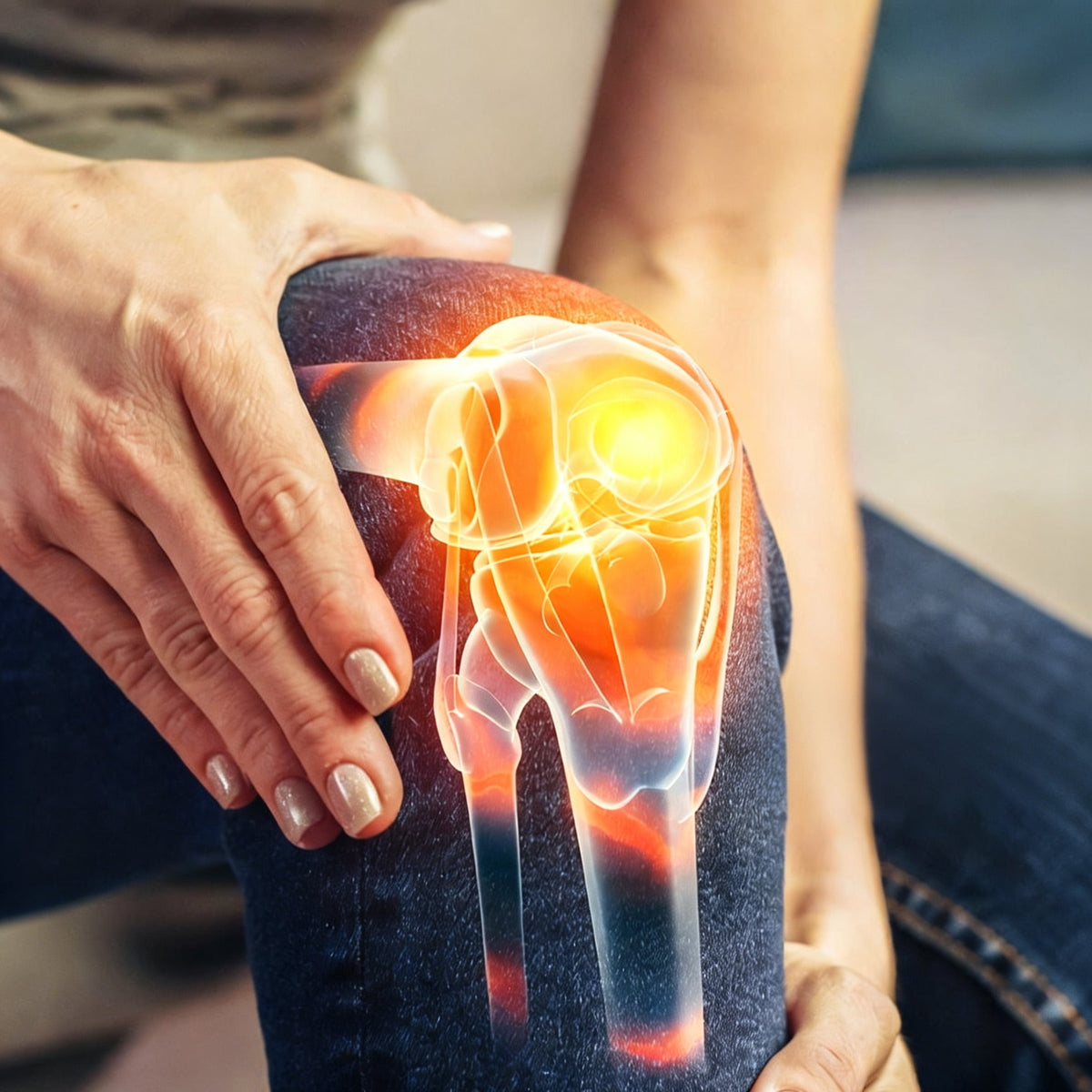
Let's be clear about what we're not saying. We're not skeptical of red light therapy — we're enthusiastic about it, because the evidence base is genuinely impressive. A 2025 meta-analysis covering 32 randomized controlled trials found that high-power red light reduces exercise-induced muscle damage by 40–80%. In the same body of research, red light ranked number one among all physical therapies for knee osteoarthritis, with 40–80% pain reduction reported across trials. Dermatological studies using proper irradiance show that red light stimulates collagen production — in one controlled trial, 75% of users saw visible wrinkle reduction, with collagen up 31% after just 30 days. It's a standard treatment at more than 1,700 medical and aesthetics institutions across the United States, and it's part of the daily recovery routine in professional sports — NFL and NBA recovery rooms are full of these panels for a reason.
The therapy works. The problem was never the science — it was that the products most people buy were never the same thing the research used. The studies used high-power panels, and the panels are what we should all be using.

Figure 9. The clinical evidence base for high-power red light.
9. How to Choose a Panel That Actually Works
If you're ready to make the switch, here's what to check before you buy. First, irradiance: look for a panel that delivers at least 100 mW/cm² — the clinical therapeutic threshold — and ideally far more. High-end devices reach 250+ mW/cm², several times the minimum. Second, wavelengths: you want at least 660nm red light for surface repair and 850nm near-infrared for deep dermal penetration; add 1072nm far-infrared if you want real muscle and joint depth. Third, build quality: a built-in cooling fan, genuinely medical-grade LEDs, and FDA registration are non-negotiable.
Finally, look for a brand that takes guidance seriously. The best panels don't just sell you hardware — they offer certified skin diagnostics and personalized protocols, so you know exactly which wavelengths, durations, and frequencies to use for your specific skin and goals. Guessing at it yourself is how you end up disappointed. With the right panel and the right plan, ten minutes a day at home replaces the clinic visit, the commute, and the guesswork.

Figure 10. Ten minutes a day, right at home.
Conclusion
Red light therapy is real. The results are real. But not in a mask — and not in a blanket. The science was never the problem; the marketing was. Masks and mats are underpowered by physical necessity, deceptive about their numbers, and built on a user experience that most people abandon within a week. A high-power panel gives you the same technology that clinics, professional athletes, and celebrities actually use: real irradiance, real wavelengths, even coverage, non-contact — and honest numbers you can trust.
That's why we don't recommend LED masks or red light blankets. And that's why we recommend a panel instead.